
Regenerating the farm
Growing a living pasture.
Trees, forage, and grazing livestock—thoughtfully managed together.
What is silvopasture?
Trees belong in the working pasture.
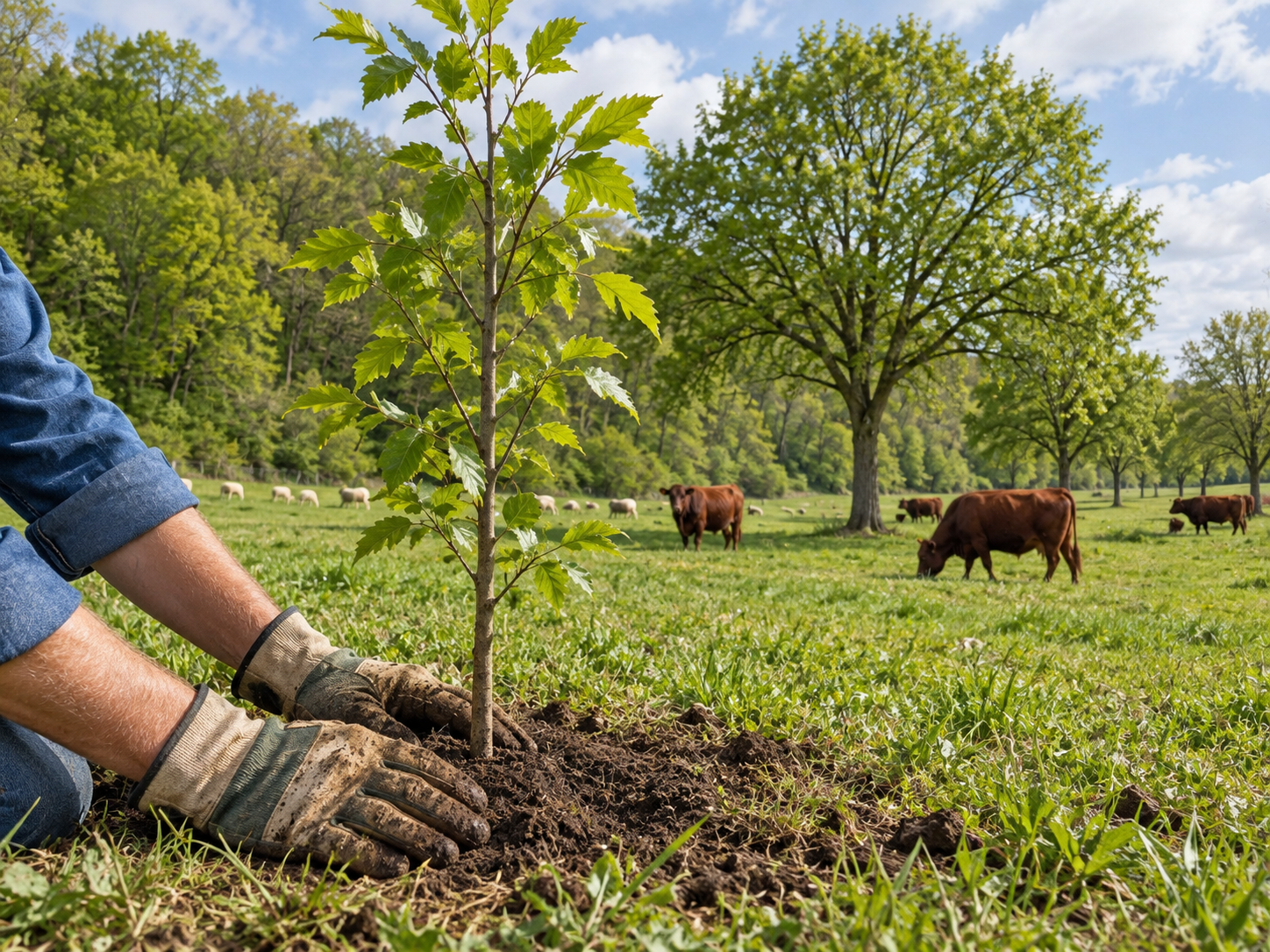
Silvopasture integrates trees, forage, and grazing animals into one managed system. It is not pasture abandoned to trees, and it is not tree planting disconnected from farm life. Livestock continue to graze as young trees grow into shade, shelter, habitat, carbon storage, and possible future farm products.
The scale of the work
Regenerating 175 acres together.
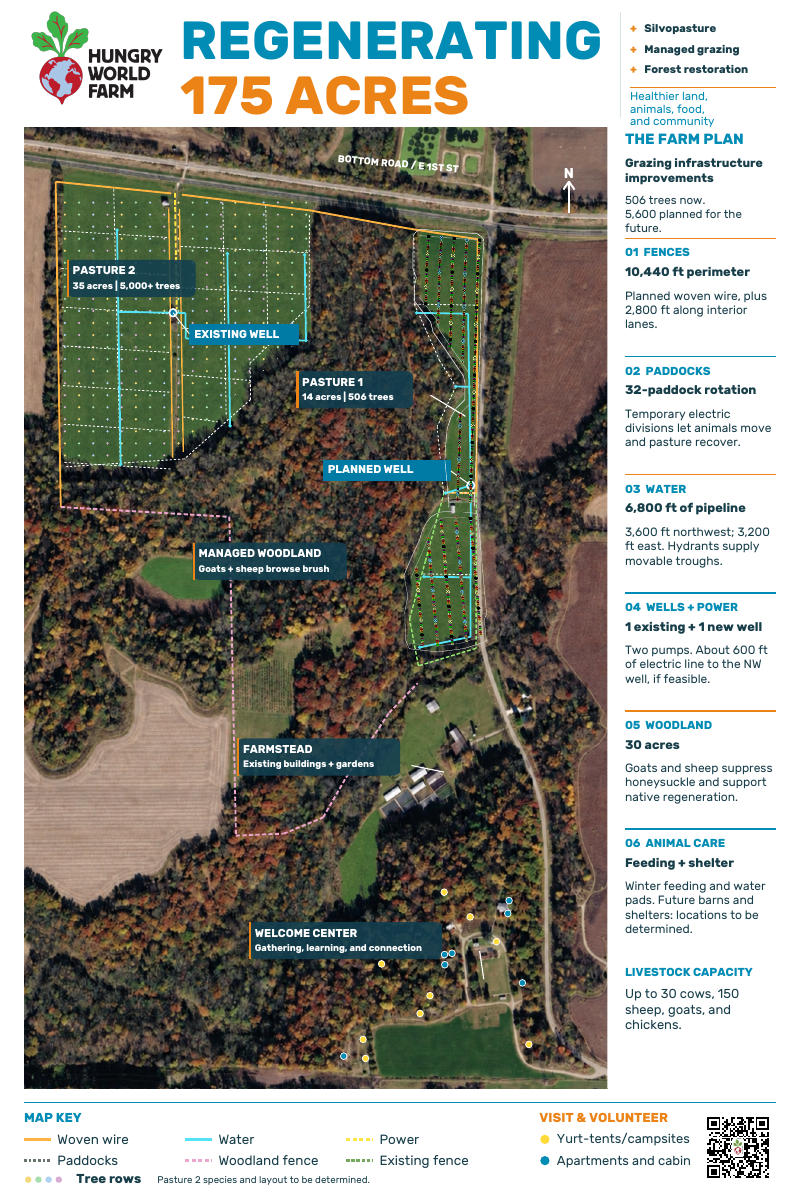
Silvopasture is one part of a connected farm-wide effort. This vision brings managed pasture, tree rows, water, fencing, and 70 acres of planned forest grazing into one working landscape.
Watch and learn
How livestock and trees can restore land.
What we are doing now
Plant. Protect. Grow.
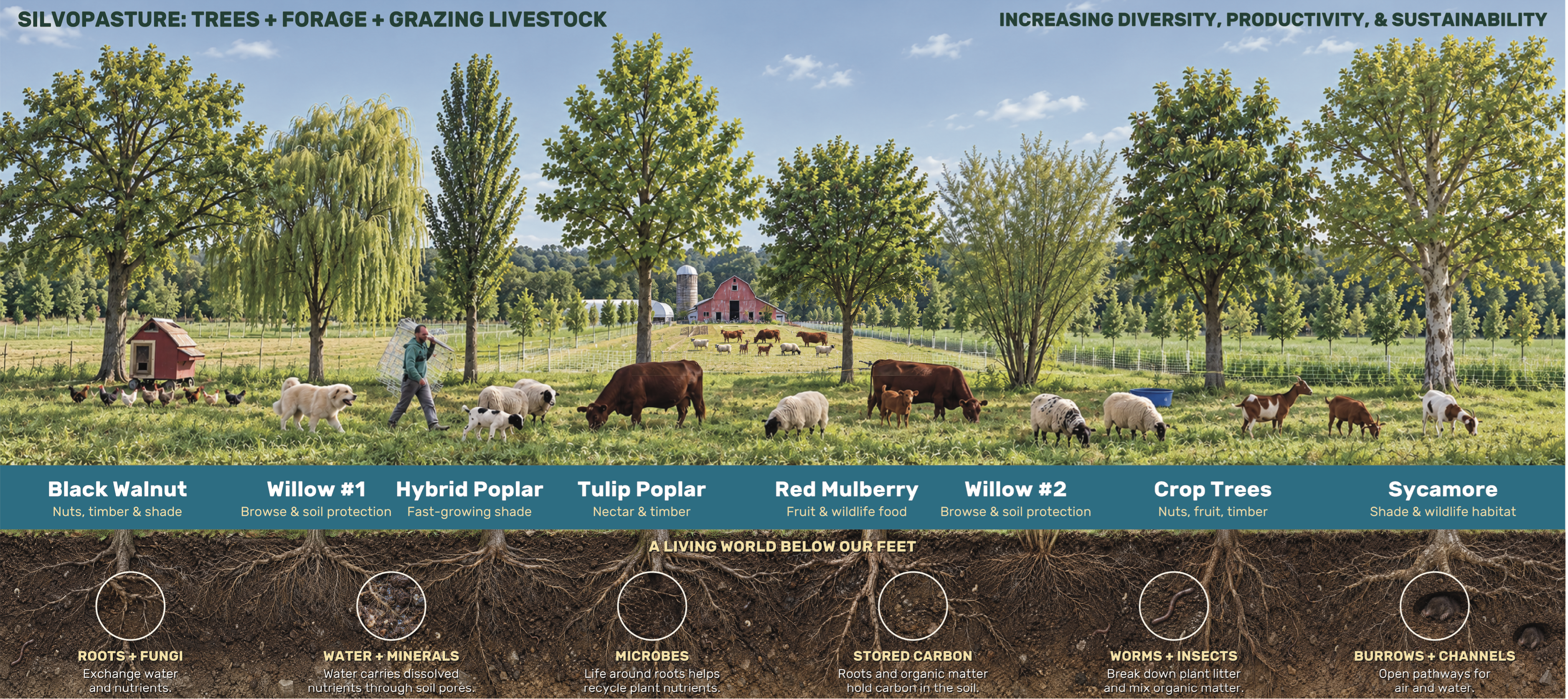
The first phase brings 506 trees into 14 acres of north pasture. The planting pattern includes black walnut, willow, hybrid poplar, tulip poplar, and red mulberry. Across the ridge, the next phase imagines 35 acres of former organic corn and bean ground becoming silvopasture; final species and field details will be confirmed as the plan moves forward.
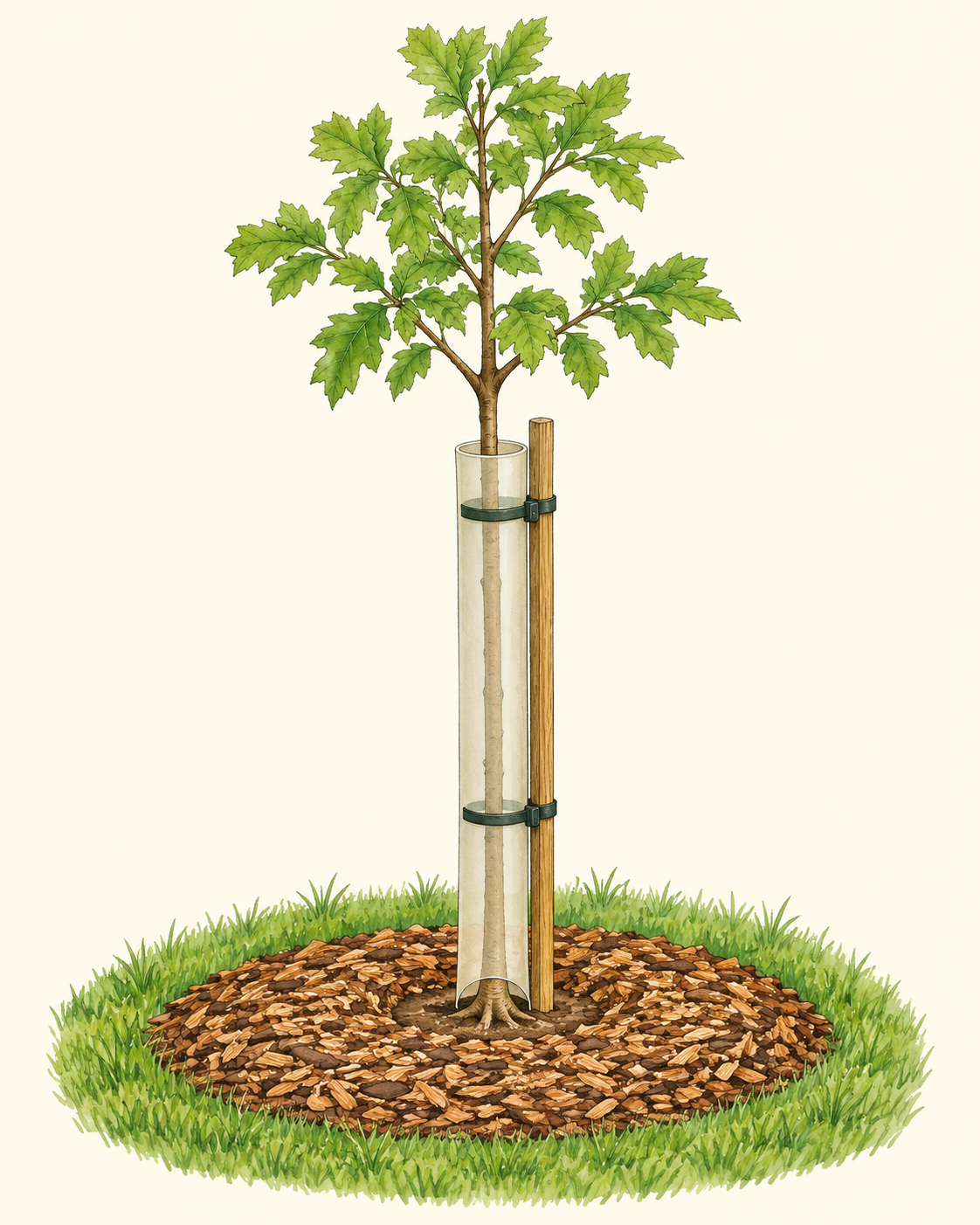
Each young tree needs patient care: staking, wrapping, mulch, water, and protection from livestock while its roots establish. The tree rows are integrated with managed grazing so forage remains active between and around them.
What it will enable
One acre. More than one job.
Silvopasture allows an acre to provide forage today while building shade and shelter for cattle, sheep, and goats as trees mature. Root systems and year-round cover help protect soil and retain moisture. Canopy and understory habitat create new places for birds, pollinators, and other wildlife.
The system is designed for the long term. Grazing continues as trees grow; the developing tree layer can diversify farm income through future crop and product opportunities. A healthier, more diverse landscape supports resilience through heat, heavy rain, changing seasons, and economic uncertainty.
Food with a visible story
The goal is not a shortcut marketing claim. It is a better production system: forage, shade, animal care, and soil-building work visitors can see. Specific nutritional claims should be paired with transparent product testing.
For livestock
Shade and shelter can reduce heat stress and support animal comfort through changing weather.
For the ecosystem
Tree roots and ground cover help protect soil, retain moisture, store carbon, and add habitat.
For the farm
Grazing continues as trees grow while future tree products can diversify income and strengthen resilience.
What grows below
Roots, forage, and living soil.
As trees establish, their roots and the pasture beneath them build a more resilient system above and below ground.
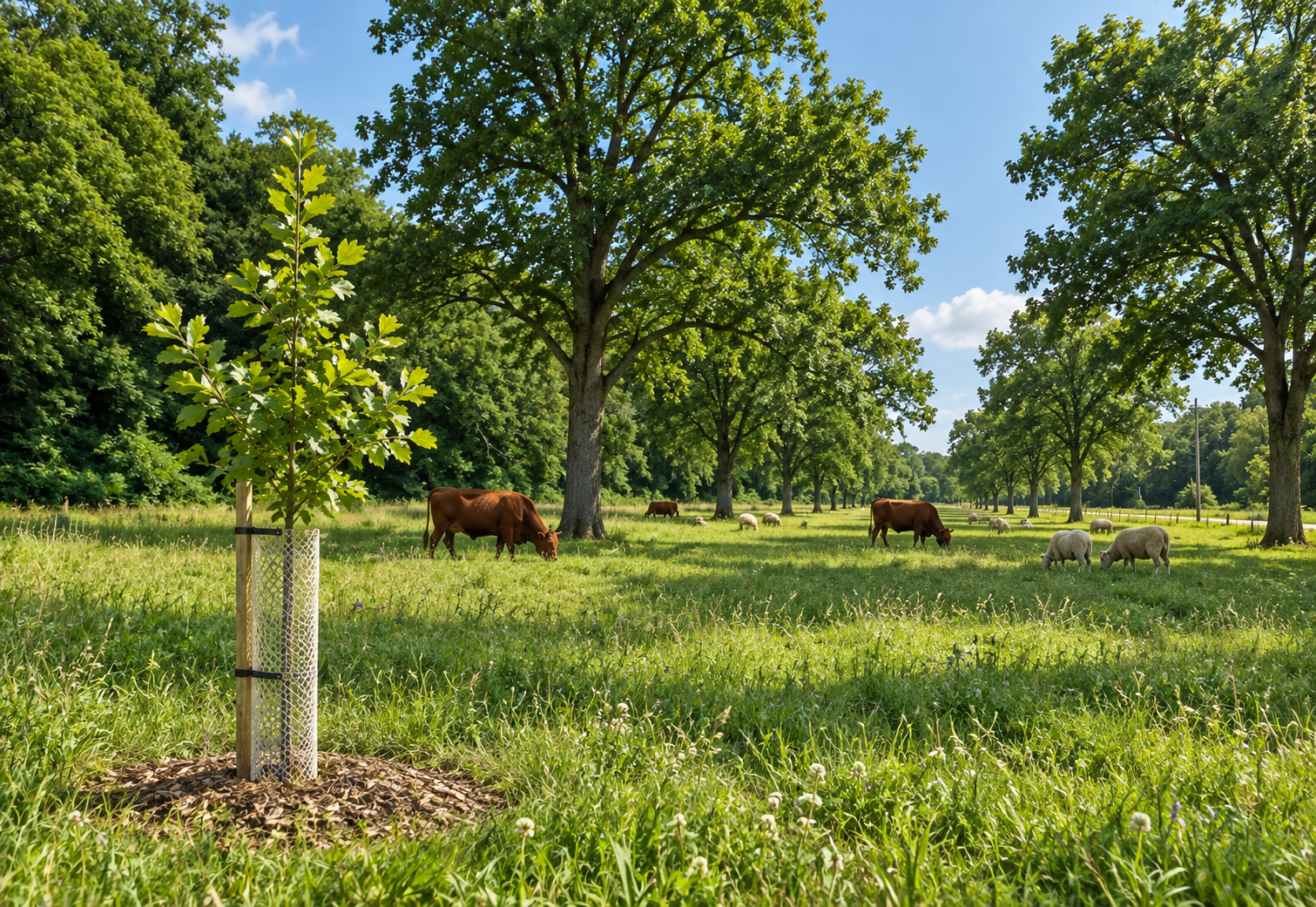
Changes over time
From protected sapling to working silvopasture.
Young trees begin with protection and steady care. Over time, their shade, roots, and habitat become part of a pasture that continues to feed livestock.
Grow with us
Plant the next generation of pasture.
A young tree needs more than a day in the ground. Volunteers can help plant, stake, wrap, mulch, water, and monitor trees that will become future shade and shelter for the farm.
Volunteer or visit Hungry World Farm