Regenerating the farm
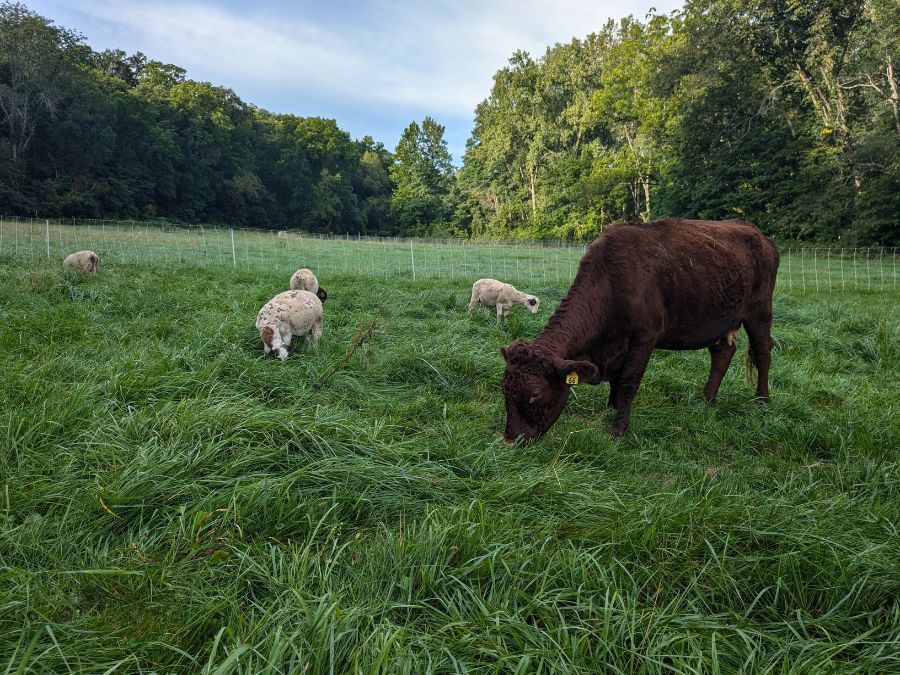
Managed grazing &
woodland restoration.
Building the fence, water, and flexible grazing system that helps land and animals thrive together.
What we are building
Infrastructure for attentive care.
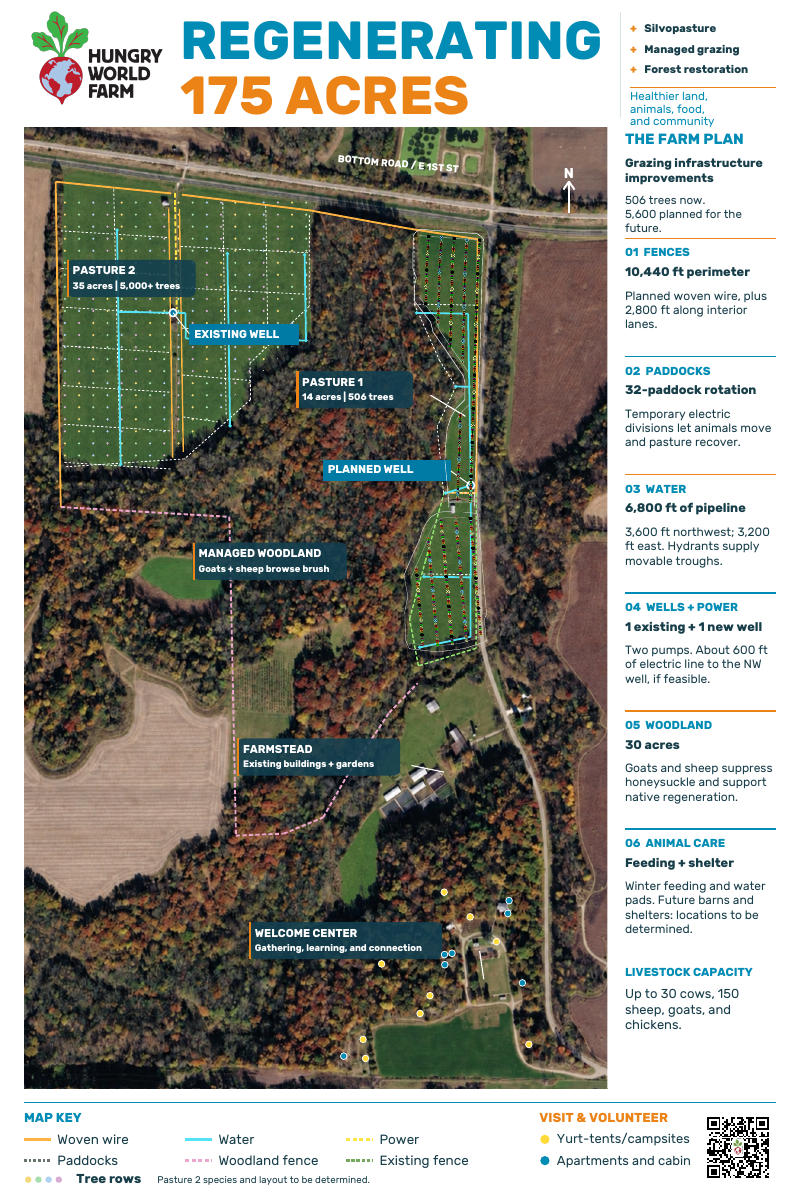
Hungry World Farm is connecting durable fence, interior lanes, dependable water, smaller paddocks, wells, and animal-care areas into one practical grazing system. These are the everyday tools that let us move livestock thoughtfully, rest the land, and bring more of the farm into productive care.
Learn more
How, What and Why We Use Regenerative Grazing
How it works
Move. Rest. Regrow.
Fence and lanes create options.
Perimeter fencing gives the farm access to additional hayfield and woodland grazing areas. Interior lanes provide safe, efficient routes between paddocks, reducing repeated traffic across the same ground.
Short grazing periods, longer recovery.
Temporary electric divisions turn larger pasture into a flexible 32-paddock rotation. Animals graze a smaller area for a short period and then move on, allowing plants time to regrow, deepen their roots, and rebuild cover before the next grazing pass.
Water follows the animals.
Buried pipeline, hydrants, and movable troughs bring clean water to the paddock in use. The plan includes 3,600 feet of line northwest and 3,200 feet east, supported by an existing well and a planned second well. Power to the northwest well is under evaluation.
What it enables
A system that can adapt.
The grazing system is designed to support up to 30 cattle, 150 sheep, and goats, with future capacity for poultry. It also includes winter feeding and water pads; future shelter locations will be determined as the system develops.
Rather than concentrating animals in a few heavily used places, the farm can respond to forage growth, rainfall, heat, and animal needs. Fresh forage, dependable water, and intentional moves support calmer, cleaner grazing conditions. Rested pasture keeps living roots in the soil longer, helping maintain cover, cycle nutrients, and let rainfall soak in.
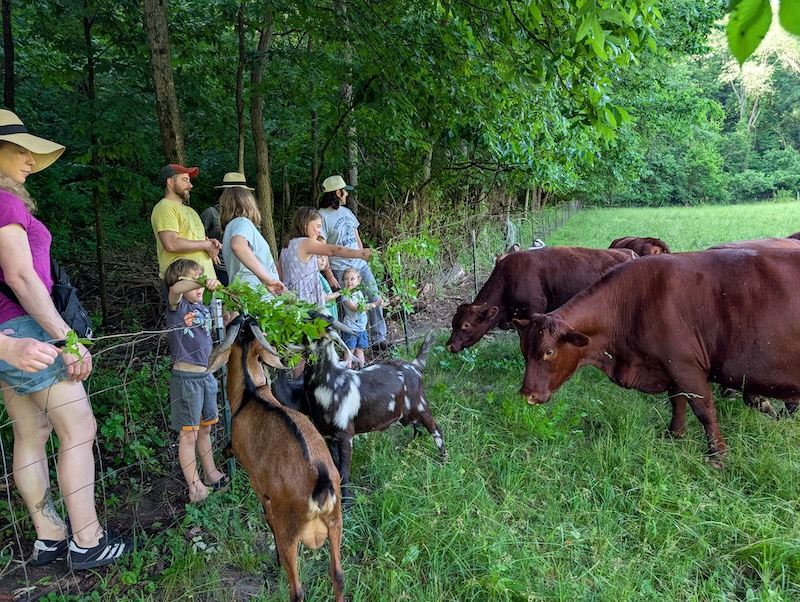
Managed woodland adds another layer. Across 70 acres of forest planned for grazing, goats and sheep can browse honeysuckle and other brush, reducing invasive pressure without routine chemical treatment and giving native plants more room to regenerate.
Why it matters for the farm
Productive pasture supports a forage-centered livestock system and helps the farm use its own acres more effectively. Better grazing infrastructure creates a durable base for animal care, long-term farm productivity, future silvopasture, and a stronger local food economy.
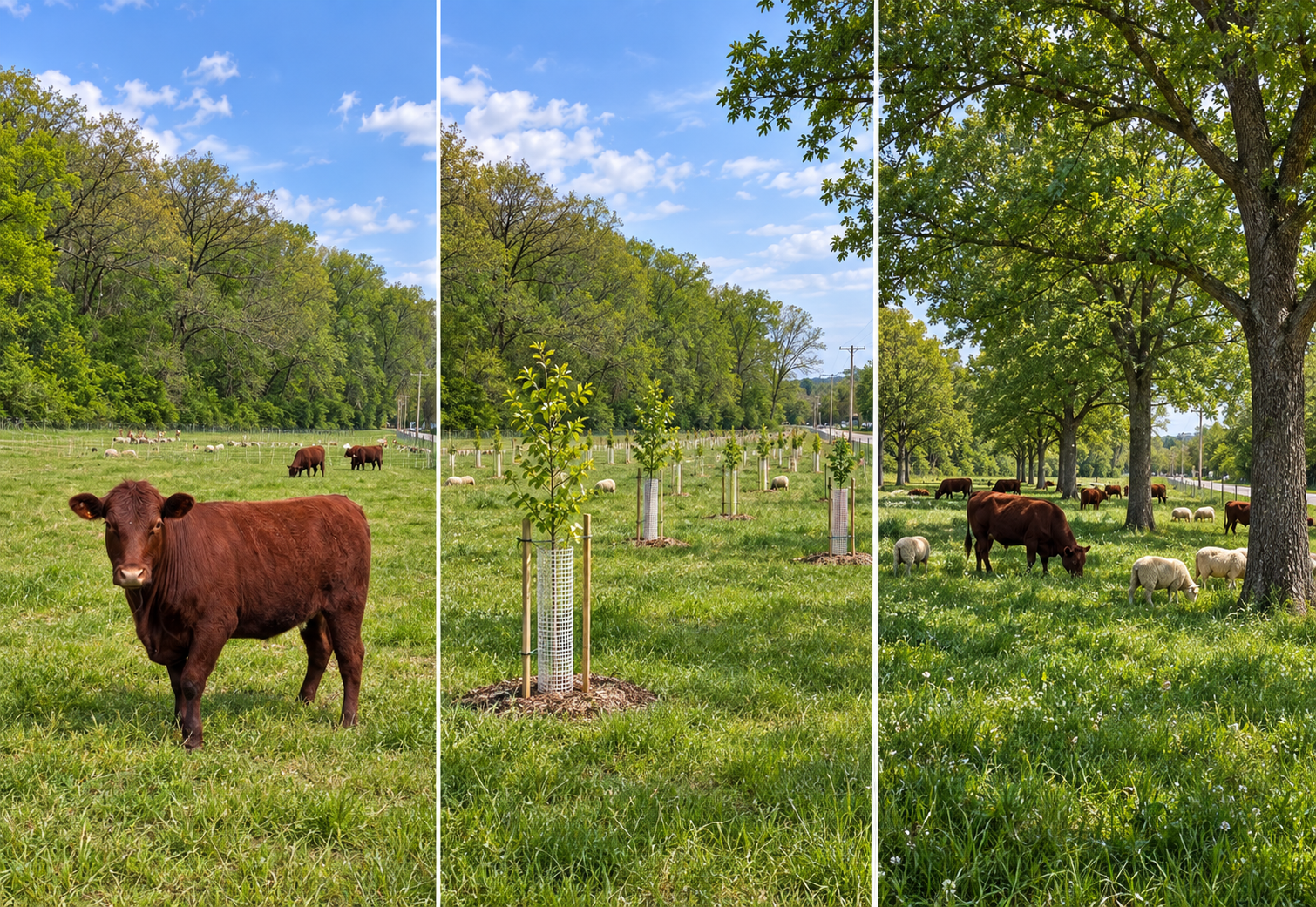
Changes over time
Pasture becomes a more diverse working landscape.
Careful grazing creates the foundation for the next layer of regeneration: new tree rows, stronger pasture, and healthier woodland.
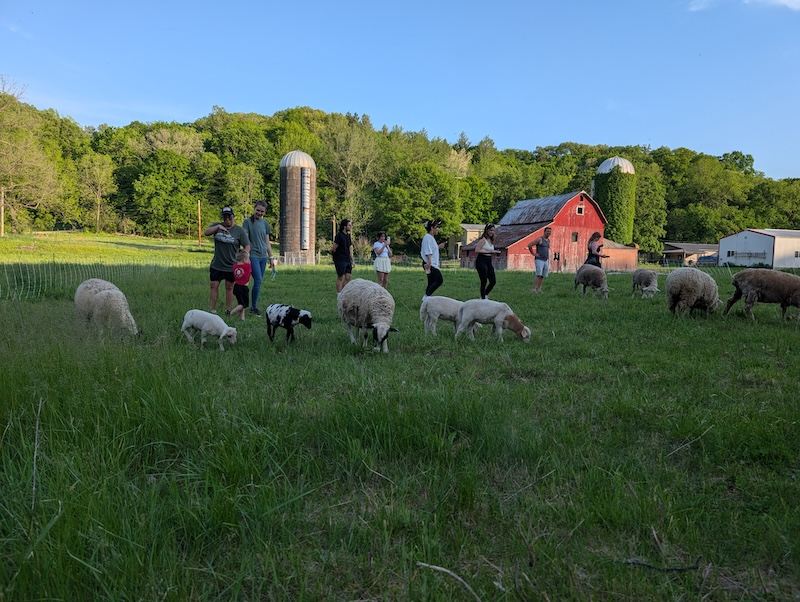
Come see it
See the system in action.
Walk the farm, meet the animals, and see how grazing, water, and pasture fit together. Volunteer opportunities may include fence preparation, water-system workdays, invasive brush removal, and seasonal farm projects.
Visit or volunteer at Hungry World Farm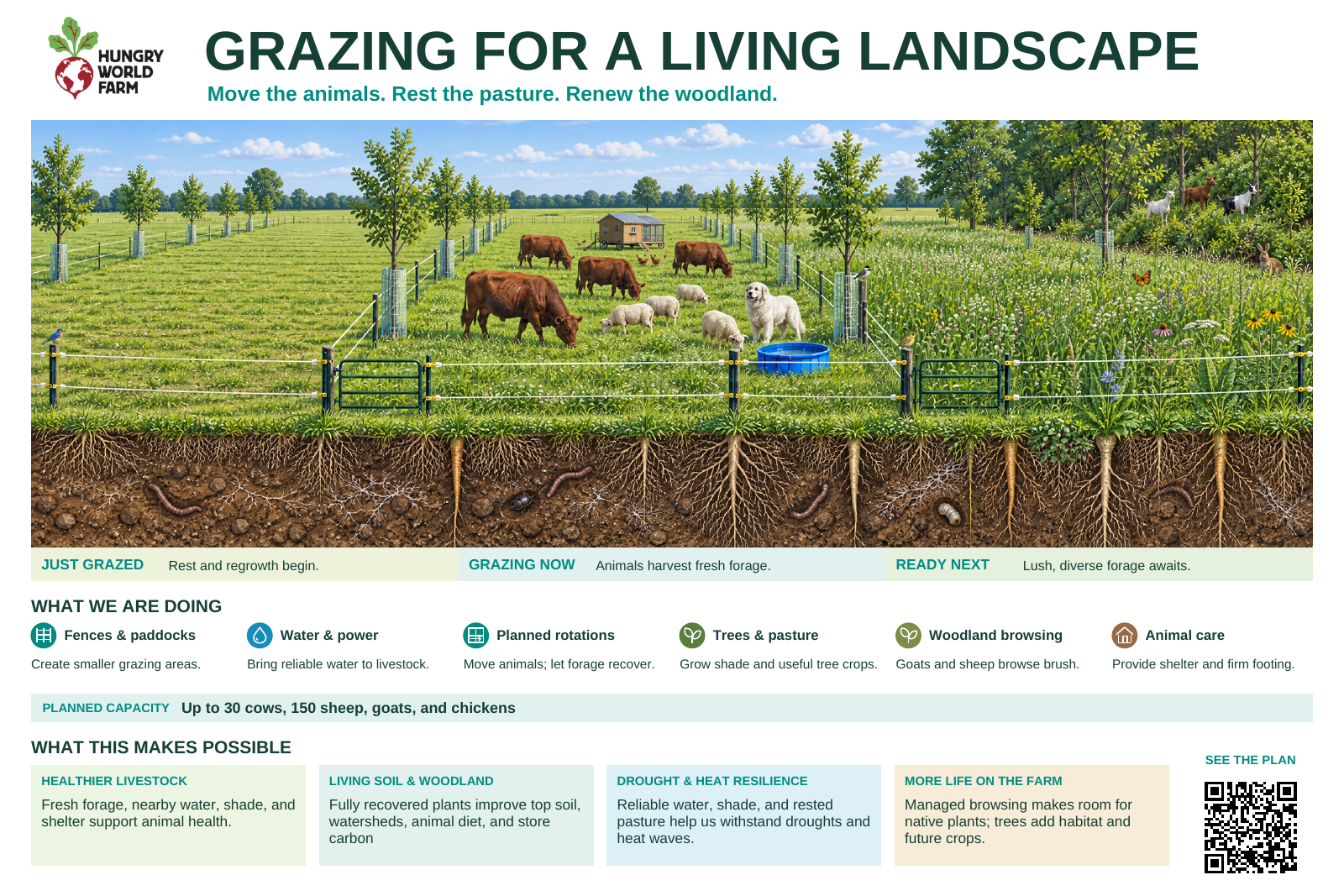
A living landscape
Grazing works from the soil up.
Healthy pasture, clean water, animal movement, and living soil are one connected system.